Mukumbura: Learning The Ropes (Part 1)
January 6, 2014
Life at Mukumbura could be a repetitive affair. Our daily routine went something like this:
→ First Light: Reveille and Stand-to (see previous post for details).
A picture of typical first light in the bush……do not be taken in by the serenity. This was a dangerous time of day. (Wild Eye)

→ Shower/Shave: Hot water supplied by a heating “donkey”. This was an oil-drum affair that got its heat from a wood fire underneath. Water fed by gravity and worked very well. Luxury really considering where we were.
Here is a typical “donkey” (ourterritory.com):
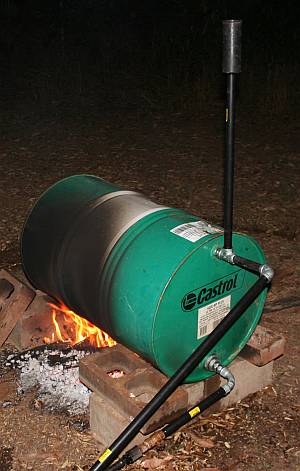
→ Breakfast: This would be a hearty ensemble of the good old pucker English type breakfast. Porridge, cereals, eggs, bacon, fried tomato, baked beans, toast, butter/jam, sauces, tea and coffee. There was always enough to eat except when we were getting near to rat-run day (ration run day). This was indeed the most important meal for us and we enjoyed it immensely. Most of us packed an egg and bacon sandwich for tea.
→ Depart for the minefield: The drive to the minefield (Cordon Sanitaire) was in a convoy consisting of personnel and mine/equipment carrying cargo vehicles (often the same vehicle which was much against the explosive regulations). The journey could take anything from 30 minutes to some hours depending on how far we were working from the camp. Obviously every day we traveled further as the minefield progressed, and thus our deployment time from the camp to work area was ever-increasing.
→ Lay mines: I will discuss in detail shortly.
→ Return to camp: Self explanatory.
→ Unload vehicles: Self explanatory.
→ Late lunch: This was great. T-Bone steaks, eggs, chips, and pudding were a common feed for lunch or supper. One thing the army could do was provide good meat to the men in the field and I am sure many of you who served will agree with me. Some of these T-Bones were huge and we all looked forward to them with great delight.
→ Prepare mines for next day. Load vehicles.
To save time we partly prepared our mines for the next days laying after lunch. This would take the form of inserting booster charges but not removing any safety devices or inserting detonators. The problem we had with some mines was that the boosters and detonators were combined and thus only the safety devices were keeping the mines in a neutral state (meaning that all elements are in place for the device to fire but the safety pin/plate is still to be removed). In other mines the detonators were integral to the mine and this was also a dodgy situation. Tragically, we were to lose 7 of our Sappers at Victoria Falls in a multi-mine uncontrolled detonation with this type of device. Thinking back this pre-preparation was not always ideal or safe but time was the enemy and it was not possible to prepare 3,000 mines each morning before deploying and it needed to be done the day before. Yes, the figure is correct, 3,000 mines per day was our normal laying target for Mukumbura, at least when I was there.
It is not the intent of this blog to teach the reader the mechanics of how mines work but I will be describing some of the items we used in some detail as part of follow-on posts as without this the dangers to us as the mine-layers cannot be fully understood.
→ Last Light: Stand-to (see previous post).
Again, don’t be fooled by the serenity. These were dangerous times and the shadows played games with a mans eyes (petergostelow.com):

→ Supper: Evening meals could be a nice curry or thick beef stew with rice or mashed potatoes. Whatever it was it kept ones tummy full. Again the quality would diminish as we got closer to rat-run day. It was easy to know when rations were due by the amount of bluish-green mould on the bread…….didn’t taste too bad if it was toasted and smothered in similarly decaying cheese though.
→ Leisure Time Utilisation: This was just a fancy army term for socialising with your mates and enjoying the 2-beer limit we had at Mukumbura. If you have never drunk out of a beer bottle that has been stored with meat that is going off in the fridge you have never lived. Just thinking about it makes me all nostalgic. There were dart boards, chess boards, checker boards, cards and dominoes available for us to while away the hours. A lot of us used this time to simply write letters home and relax in preparation for the next days work. A man also needed his solitude and quiet time.
→ Shower and sleep: As for Shower/Shave above.
In the upcoming posts we will look at the types of mines we used throughout Cordon Sanitaire operations country-wide as well as the main mine-laying methodology.
The Road To Mukumbura (Part 5)
December 28, 2013
One of the stops on the long road to Mukumbura was at Mount Darwin. This was always looked forward to with glee by road-weary travellers as there was a canteen situated in the town that was run by the Womens Voluntary Services (WVS). These volunteer and always smiling ladies had an abundant variety of non-army home made food and ice-cold drinks available for dusty-faced and sweaty soldiers either going on ops or returning home. Hot-dogs full of fiery mustard, hamburgers with fresh salad and relish, meat-pies and cakes were almost always available as well as huge urns of tea, coffee and juices. All of these culinary delights were normally free but in some cases and depending where the canteen was situated a small payment was taken, often in the form of a small donation. Some of the funding for the WVS came from the Border Patrol Welfare Fund (whatever that was) too. Wherever the funds came from these establishments were huge morale-boosters. All of us who made use of this hospitality owe a huge debt of gratitude to the sponsors and ladies for making our lives just that little more bearable.
Below is a typical WVS set-up manned by nice smiling ladies packing boxes of goodies for the troops (courtesy of The Herald and ORAFS):

I was kept warm on many a chilly night by hand-knitted gloves, balaclavas, caps and scarves that the WVS also made available during the bitterly cold Rhodesian winters. These were all made by volunteers and came in any colour as long as it was green or black.
The only sad thing about these visits was that they were over too quickly and time was always going to be the enemy. The more these ladies made us feel like we were at home, the more we missed it and perhaps it was easier for us to be on our way as quickly as we could…….away from the false sense of security and the occasional whiff of a ladies perfume.
It was time to leave, and we furtively filled our water bottles with cool-drink and stuffed extra burgers and buns into side pockets for the final leg of the journey. As we stepped outside another convoy came to a noisy and dusty stop outside the canteen. The tell-tale red and blue unit flash on the vehicles indicating they were Engineer Corps vehicles, the same as ours. The only difference was these were taking their passengers home…….ours were taking us to a very different place.
Below is a photo of Mount Darwin in the 80’s but it would not have changed much from when I was there in the early-mid 70’s (thanks to New Rhodesian Forum)
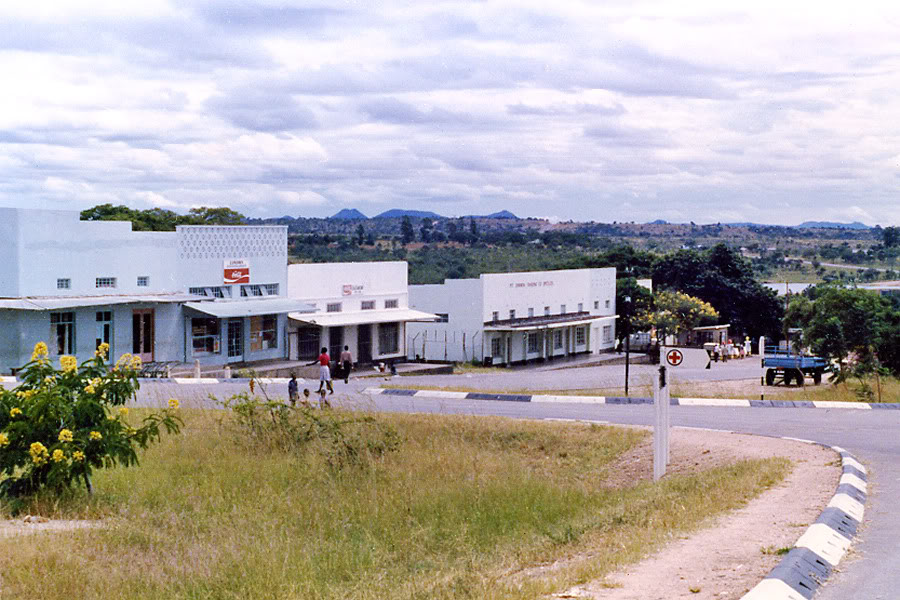

As I strapped myself back into my seat I caught the unmistakable aroma of fried onions and tomato sauce…..I looked down and noticed I had dripped food all over my shirt-front. A trail of yellow egg-yolk mingling with the camouflage pattern. I would scratch it off later when the sun had dried it to a scaly crust.
The engines started, and as we slowly rolled out onto the main road I realised guiltily that I had forgotten to say thank you to anyone for the brief respite we had just enjoyed.
I cocked my rifle, rechecked the safety, and we were gone.
The Road To Mukumbura (Part 4)
July 30, 2013
Let me be clear.
I was never unlucky enough to be ambushed traveling through Ambush Alley in the Mavuradonhas, but I know quite a few people who were. These encounters ranged from ineffectual pot-shots being taken at Rhodesian Security Force convoys to intense firefights, sometimes in the hours of darkness. We had people killed and injured going through the mountains. It was a main personnel and logistic route to the North-East Border with Mozambique. The issue with traversing Ambush Alley was the steeply angled incline of the road and this resulted in straining engines and overheating vehicles. Stopping in an ambush killing-ground is a dodgy business indeed and not for the faint-hearted. To help vehicles get up to the summit of the pass, concrete had been laid on the road surface to help during the heavy rains that could hit the area. Additionally one side of the road was a sheer drop and the other went straight up and so close to the vehicles in some places you could touch the trees. Perfect ambush terrein and the gooks could not be faulted for choosing it as a killing-ground. The photo below will give you a good idea what the terrein and contours were like although it does not do the challenges on the ground justice. The road is clearly visible:

Here is a map which shows the roads we traveled to get through the mountains. As you can see any route you chose to Mukumbura had to go through the mountains called Mavuradonha:

Ambush Alley was still a long way down the road though. Before we got there we would be in for a treat at a place called Mount Darwin. Something to look forward to.
I settled back in my seat, tightening the straps on my harness, and counted the little white distance markers next to the road to keep my mind active.
The Road To Mukumbura (Part 3)
July 14, 2013
I had already unclipped and shrugged off my safety harness before the vehicle had come to a halt. A couple of the lads had started to release the tailgate catches and it fell outwards onto its rubber stoppers with a dull thud. Some of us debussed via the tailgate step or simply jumped over the side of the vehicle, FN in one hand and the other used for balance. The smell of burning oil, hot tyres and exhaust gases filled the air. The heat seemed to make them stronger.
Most of us immediately looked for the nearest tree to pee under, others carrying entrenching tools and bog-roll for more serious business moved further away. This would not be a long stop so no one had tea-making kit out. The best we could expect was a sip of water from our water bottles. There is a funny thing about plastic water-bottles……the water always tastes like plastic……especially when it is warm. Those of you who know this taste will understand what I mean. The best solution to this was to chuck a bag of Jungle Juice from a rat-pack in the water and enjoy the orange-like taste.
It was all silent now. Men cowering from the sun in the shadows cast by the vehicles and trees next to the road. Always vigilant…..looking outwards for gooks…….sweat filled eyes burning, vision blurred and playing tricks.
The only sound was the metallic pinging of the engines and exhausts cooling down.
Drivers walked around their vehicles, checking tyres and cargo, at the same time stretching their limbs. They would change-over with the co-drivers now and perhaps find time to relax a little once back on the road.
As the cab doors slammed shut we made our way back to our seats, strapped-in and readied ourselves for the next stretch of our journey……taking us further into the gook badlands…….closer to Mavhuradonha, the “Place Of Falling Water”.

With every turn of the wheels we were also getting closer to another place….a place infamous in Rhodesian Bush War history……a place called Ambush Alley.
The Road To Mukumbura: Part 2
July 8, 2013
The hypnotic whine of the water-filled tyres on the tarmac and the side-to-side roll of the heavy Rodef Troop Carrying Vehicle (TCV) lulled one to sleep in a surprisingly short period of time. The sun blazed down on us, burning our arms and faces. The matt-painted metal bodywork of the vehicle was hot enough to fry an egg on. We were meant to wear our webbing while traveling in case of an emergency de-bus but the majority of us took it off to gain some comfort. It gets quite irritating having a water- bottle stuck in each of your kidneys for 400 clicks. It would still be a few years before we progressed far enough to have chest-webbing, similar to that worn by the gooks.
Here are the different types of webbing I wore in Rhodesia
Standard Rhodesian Army Webbing complete with FN bayonet frog and bayonet (and kidney bruising water-bottles plus other paraphernalia):

More practical Chest Webbing came a little later and is shown below:

Thanks to Military Photos for the items shown above
Normally I would try to get the seat facing the near-side and up front next to the cab. This had two advantages from my perspective. Firstly if one fell asleep you could use the vehicle cab as a pillow and secondly if a person stood up to stretch their legs they had something to grab onto as the front roll-bar was right next to this position. The cab was also a pretty good wind-deflector. On the Rodef 45 and 75 versions, the passenger side of the cab had a turret at the top and one of the nicest places to be was standing on the softish passenger seat with your head and upper body outside the vehicle. I had many a conversation with blokes at the back from this position and vice-versa.
One of the most irritating things that could happen to you on the back of a TCV was getting hot cigarette ash in your eye. This could be your own ash or someone else’s. Boredom was a big problem on these journeys and smoking seemed to help a lot so plenty of ash flying through the air. Not good for the lungs or the eyes. Most of us smoked Madison, one of local equivalents as we could not get the international brands. Not a bad cigarette though.
 Thanks to cigarettespedia.com
I must have looked like one of those nodding dogs on the back shelf of a ’65 Ford Cortina. As the miles slipped by my head bobbed sleepily up and down. I felt the vehicle driver change down, the revs climbed, brakes coming on and the vehicle slowed. My head banged into the cab with the changed momentum and I was wide awake. It was time for a break and driver change. It couldn’t have come at a better time as I was bursting for a piss.
Mukumbura: Salisbury Sojourn (Part 1)
February 14, 2013
Getting to Mukumbura was a pain in the arse……literally. If you have had the opportunity to sit on the steel benches in the back of a Bedford RL for 400 clicks you will understand exactly what I mean. Your arse goes numb and so does your scrotum for some reason. I have even had pins and needles in my dick during these trips, loosing all sensation and not knowing if it was still an appendage to my body. Here is a picture of a Bedford RL:

Bedford RL
Secondly, and more irritating than numb-nuts was the fact we had to deploy through Salisbury. This involved having to accept the hospitality of either 2 or 3 Engineer Squadron (Rhodesian Corps of Engineers). These units were based at either King George the Sixth Barracks (KGVI), or Cranborne Barracks (also home of the Rhodesian Light Infantry (RLI)). It seemed to many of us from 1 Engineer Squadron (Brady Barracks, Bulawayo), that the Salisbury Squadrons had an air of superiority about them. This was probably a result of Engineer Directorate also being in Salisbury. I cannot say that I enjoyed any of my visits to these units and the sooner we had done what we had to do there and got on our way the better. Having said all of that there were some good men in the Salisbury Squadrons and I made a number of close friends from these units during my 7 years in the Rhodesian Army. Here is a picture of the entrance to Cranborne Barracks:

Our normal stop over was about 2 or three days and during this time we would do retraining, load up any logistics that needed to get to Mukumbura (including anti-personnel mines), and get pissed in the many watering holes in Salisbury. One of these pubs was La Coq D’or which the RLI considered to be their personal domain and woe betide any other Unit that encroached on their territory. There have been a number of memorable punch ups there. Here is a picture of the place (courtesy of New Rhodesian Website):

And a menu cover from way back when:

All good things come to an end however and we had to move on. We had a mission after all…..to lay mines and stop the gooks getting into Rhodesia. We climbed up into the Bedford’s, and with the stench of exhaust fumes polluting the air and stinging our eyes we were off. Wrapped up against the cold in my prickly grey army issue blanket I could still taste the bacon, eggs and coffee we had for breakfast as I settled in for another ball-numbing journey.
Mukumbura (Where the Gobbies* Lay the Mines): Introduction
January 22, 2013
* Gobshite (also referred to as Gobbie, or Gobbies): One who engages in nonsensical chatter or unwanted conversation. For example- What’s that gobshite talking about now?
“Down in Mukumbura where the Gobbies lay the mines,
A Gobbie laid a mine in another Gobbies line,
Said the Gobby to the Gobby, keep on your own line,
And never lay a mine in another Gobbies line”
Minelaying song sung by Rhodesian Sappers laying mines during Cordon Sanitaire operations, Mukumbura.
I have absolutely no idea how I have remembered this song all these years.
The most recent National Service intake of Sappers were referred to as Gobbies.
Below is a photo of the early Mukumbura minefield. Note the gook breach in one of them.
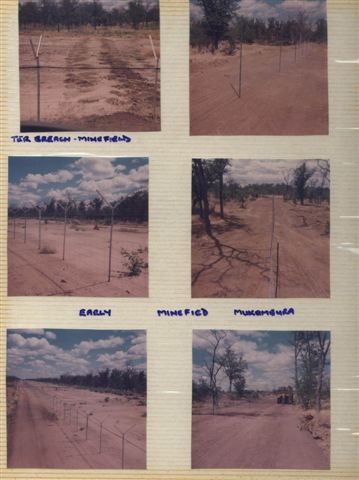
Place name: Mukumbura
Latitude: 16° 13′ 57″ S
Longitude: 31° 42′ 31″ E
Below is a gook infiltration map. Mukumbura is in the North-East.
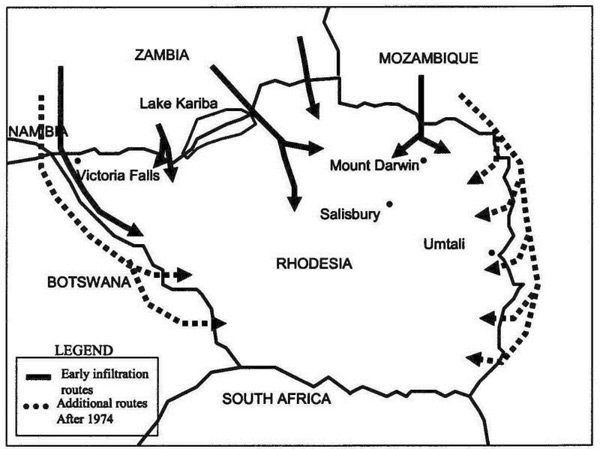
Operation Hurricane
The object of Cordon Sanitaire was to use minefields and patrols to channel insurgents into designated areas from which the local population had been removed. They could then be tracked and killed before they reached populated areas.
The first Operation Hurricane “no-go” area was along the Mozambique border in May 1973. Other “no-go” areas were extended along vast stretches of Rhodesian border in an attempt to establish depopulated “free-fire” zones for Security Force operations. This concept that anyone seen moving in an area is considered a terrorist and can be killed was tried in some areas of Vietnam too but was not particularly successful.
More to follow on Mukumbura in the next instalment.
Chasing Gooks With The Infantry
January 21, 2013
Wankie (1 Independent Company): 1974/75-ish
Besides landmine incident call-outs, the days at 1 Indep also consisted of camp guard duties, patrolling the married quarters at night, and escorting ration-runs to deployed call-signs in the Company area of responsibility.
Late one afternoon this somewhat laid-back routine was, without warning, rudely interrupted.
Contact had been made with a large group of gooks and they were on the run. Normally in these types of situations the general idea would be to get as many additional feet on the ground as quickly as possible to track the gooks and kill them. At the same time as the follow-up was taking place, stopper groups would be placed ahead of them and straddling their likely axis of advance.
The best way to get a good grip on the situation was to have an aircraft up above the gooks to give the trackers an idea which way they were heading. Choppers would then drop Fire-Force sticks off to give chase. The choppers would also drop of the stopper-groups into which the gooks would hopefully run. One of the aircraft used for the top-cover and gook tracking was the Cessna Skymaster or as we called it, the “push-pull” due to its engine configuration (one back and one front). This aircraft was also known as the “fuck me-suck me” by many of us. Here she is:

This specific aircraft had the callsign prefix of “Hornet” due to the twin Browning’s at the top looking very much like insect probiscae. These aircraft also carried Frantan bombs that acted very much like Napalm and it was a pleasure to see these being used. Gooks normally quickly lost the urge to do anything bad after one of these was dropped near to them.
The helicopter of choice for the deployment of troops was the good old Alouette 3, also known in the Rhodesian Forces as Cyclone 7. These could be armed with either twin Light Machine Guns (G-Car), or a 20mm cannon (K-Car). The plan would be for G-Cars to drop troops off on the tails of the gooks who would then chase them into the waiting stopper groups (if they were in position) where they would hopefully be killed or captured. This picking up and dropping off of troops took time as the G-Car could only take 5 troops at a time and many opportunities were probably missed because of this lack of an appropriate trooping capability. Here is one of the choppers we used (Beaver Shaw behind the guns and photo by Dominique Hoyet) :

I had managed to get dragged into leading one of the stopper-groups this specific day (by Don Price) and had been dropped off with whatever and whoever was available at the camp. The area that needed to be covered to catch the running gooks was so wide that we had cooks, medics, bottlewashers, and mechanics in the stop-groups. Remember that in the Rhodesian Army we were all Infantrymen first and specialists second. It was in these circumstances that the training model really paid off.
By last light we were still lying there waiting for the gooks to run into us but nothing happened. It gets a little creepy in these situations as you need to be really careful not to shoot your own people chasing the gooks. With non-combat type troops with me this was a real possibility and I knew it. I was not quite sure what the next move was going to be and was hoping that we were not going to be expected to stay out the entire night. Due to the rushed and calamitous deployment, none of us who were normally non-Fire Force troops were carrying warm clothing or rations. As fate would have it I received a radio message that we needed to stay in position for the night. I informed the gentleman on the other end of the line that my callsign was not equipped for a night stop and he (the same Don Price) had the temerity to call us dudes (yes, dudes!) over the air. This annoyed me a bit, but we had a job to do, and we got on with it. I could not have worried less, but the welfare of my troops came first, and we did get the necessary support for the night.
As far as I can remember they never did get any of those gooks either so all-in-all an unsuccessful day all-round and perhaps in some way I contributed to this poor result. I doubt it, although in retrospect I should have been more prepared for this type of call-out though, and I would not be caught out again. It was pretty piss-poor preparation on my part.
I didnt know it at the time but as we flew back to Wankie there was planning taking place in Bulawayo that would soon see me redeployed to a place synonymous with the history of the Rhodesian Corps of Engineers…..Mukumbura!
First Blood…..Sidindi Island (Part 5)
February 28, 2011
I can remember walking past palm trees and what looked like sea sand as we followed Don back down to wherever he had come from…..the Zambezi flowing smoothly on my right hand side….gurgling on its merry journey to the mighty Kariba Dam…..many miles away. Where it crashed over the countless rocks it foamed and sprayed a fine mist……the wind blowing it into our hot and sweaty faces…..cooling and refreshing.
A radio crackled near to me and the 1 Indep stick leader answered with his call-sign. He had a short and sharp conversation with someone on the other end consisting of “copied”, “affirmative”, “say again”…..and finally “roger out”. He moved up closer to me and let me know that a recovery vehicle had arrived but was standing off some distance from the mine victim until I gave the all clear on the road.
Don had diverted us onto a path that left the dirt road and led along the river bank……and it was then we saw a couple of soldiers up ahead….on guard and highly alert. They let Don through and we entered a place of carnage……and what was until a few hours ago an SAS temporary base.
All around us were bits and pieces of kit..neatly piled up as if waiting for collection…webbing, weapons, eating utensils..some damaged by gunfire…the stuff that soldiers carry….and shockingly, a heap of bloody sleeping bags and Rhodesian uniforms….now tattered and ripped apart…blood stains mingling with the camouflage pattern…riddled with bullet holes. There was indeed a certain smell about the place…..a smell I would get to know well……the smell of blood. Nothing else like it. Clearly something bad had happened here….you could feel and see the despair in the faces of the few grim men that were there. Cartridge cases that were not familiar lay scattered all around, the wrappings of first field dressings and used inter-venal drips, some with their tubes still attached littered the ground……the bits and pieces of medical kit that were the signature that some serious shit had gone down not too long ago.
Don took us into a shady part of the camp and sat us down. It was the measure of the man that although he wore the coveted wings of perhaps the finest special forces unit in the world, he treated us as equals at this time. He proceeded to brief us on the events of the past hours…..not in too much detail to endanger security, but enough for us to understand the background as to why we were there, and the seriousness of the situation.
Apparently the SAS were on an external operation in Zambia doing what they do and had been over there for some time. On their return to Rhodesian soil they were well and truly knackered and formed a temporary base at Sidindi Island so that they could rest before being picked up and returned to their main base. They ate and they slept. They had arranged their sleeping positions in two lines close to each other with a narrow path between the two. A guard was posted and the rest slept. Sometime in the early hours of the next morning when one sleeps the deepest a group of terrorists entered the camp and walked down the path between the two rows of sleeping men and machine-gunned them mercilessly as they lay in their sleeping bags. I do not recall if anyone was killed but there were some severe injuries received. Those that could managed to fight the gooks off but the damage was done. They were understandably devastated….but also professionals…..and immediately began the task of helping the injured and getting them out. The blown up Bedford was also part of the reaction force coming to assist them. These gooks who attacked were definitely not the normal run of the mill banditos……they were very clever…they knew there was only one road where help would come from and they had mined it with a successful hit…..a tactic that I would encounter on more than one occasion. They had also clearly observed the SAS go into a temporary base and had waited patiently for their chance to strike……showing great restraint before attacking.
We drank tea and offered what help we could and made our way back up to the road…..all of us deep in thought……and a lot more switched on than when we first arrived. If those who had so audaciously attacked the SAS camp with so much success were still around we had a problem. However we completed our mission without incident or more mines on the raod and the recovery vehicle was able to come in and take the sad old girl away to fight another day.
It was time to return to Wankie……and the gunship was summoned by TR48 radio carried in the recovery vehicle. It was late when we boarded and the pilot informed us he would not be taking us back that evening but rather to the South African Police base at Sidindi (or it could have been Mapeta?) where we were destined to be treated to some real South African hospitality….good food…steaks and boerewors and cold Castle beers…we even had coffee bought to us in bed by the Padre after he had read us all an evening prayer.
I hoped that he was also praying for all the SAS boys we had just left behind.
Sometime later stories about the Sidindi incident began to circulate..some of it obvious bullshit…but the most plausible one was that the sentry, being exhausted just like the rest of them, had fallen asleep at his post and the gooks had simply walked past him and into the camp. I have no proof that this is the case but the importance of an effective guard system remained with me for the rest of my military career. A few years on and in a different country I was to see first hand the result of a sentry falling asleep……except this time I was one of those on the receiving end. The result might not be what you expected.
 Fatfox9's Blog